Intro Gallery
2A – UPHOLSTERER
The legend of Betsy Ross looms large in public memory, but in truth she was a prolific upholsterer and flag maker. While no receipt for that first flag is known to exist, we do know that Betsy made numerous flags and knew many prominent citizens through her upholstery work.
Washington was not the only well-known individual to employ Betsy for upholstery work. Others include Benjamin Franklin, Benjamin Chew, Tench Coxe, and the government of Pennsylvania.
Bills and Receipts, 127.2
Coxe Family Papers, Collection 2049
Historical Society of Pennsylvania
Benjamin Franklin Memorandum Book
Paid John Ross upholsterer 14 shilling 6 pence
American Philosophical Society
WASHINGTON RECEIPTS – 2B
John and Betsy Ross were on their way to becoming successful upholsterers when they set up their first upholstery shop in 1774. Among their most prominent customers was George Washington. When Washington was in Philadelphia for the First Continental Congress in the fall of 1774, he commissioned fashionable goods for Mount Vernon, his Virginia estate, including beds made by the Rosses.
In his ledger book on September 30, 1774, Washington recorded: “Bed Furniture & Making £55.12.6” Meaning, on September 23, 1774, Geroge Washinton advanced John Ross the upholder, another word for upholsterer, £15 to begin working on the project. On the 30th, he purchased fabric for the beds. On October 10, 1774, he paid the remainder of his debt to John Ross, £29.7.2.
The total cost of the beds, including labor and materials, was £55.12.6.
How much is £55.12.6?
Fifty-five pounds, twelve shillings, six pence is a significant amount of money. An average male laborer earned an average of £59 per year; a female laborer averaged £25.
This means a male laborer would have to spend his entire annual salary to purchase these items, or a woman would need to work two years to be able to afford them!
Mount Vernon Ladies’ Association
Photograph by Gavin Ashworth
September 23, 1774
-Memr. Left with Mr. Ross the upholder 5 half Joes to buy furniture with and to be accounted for 15.0.0
September 30, 1774
-By 2 ps. Callico Bed furniture 9.0.0
September 30, 1774
-By 7 yds of Muslin at 5/1.15.0
October 10, 1774
-By Mr. Ross’s acct. exclusive of ye 15£ advanc’d ye. 23d of Sepr. 29.17.2
BETSY ROSS THE FLAGMAKER – 2C
Over the course of her lifetime, Betsy Ross made hundreds of flags. Her earliest known receipt for flag making dates from May 29, 1777, two weeks prior to the June 14th Flag Resolution.
RECEIPT
“An order on William Webb to Elizabeth Ross for fourteen pounds twelve shillings, and two pence, for making ship’s colours, &c, put into William Richards store….£14.12.2”
Pennsylvania Navy Board Minute Book,
Pennsylvania Historical and Museum Commission
RECEIPT
May 28 1813 – “large American ensign” costing $27
Rodney Collection
Delaware Historical Society
LEDGER, PURVEYOR OF PUBLIC SUPPLIES,
1809-1812
Coxe Family Papers, Collection 2049
Historical Society of Pennsylvania
Chicago History Museum
ICHi-066120
Most surviving records of Betsy’s flag making date from the War of 1812, when she stitched under the name of her third husband, as Elizabeth Claypoole. Receipts show that she stitched ensigns, garrison flags, and presentation flags for official diplomatic relations with American Indians. These likely represent only a fraction of her commissions.
BETSY AND POPULAR CULTURE – 2D
The Betsy Ross House was not the only thing that kept Betsy’s story alive. So, too, did a growing consumer market for Betsy Ross images and memorabilia. These goods proved especially popular during the 20th century as they evoked American patriotism and identity during periods of heavy immigration, social change, and economic upheaval. Betsy Ross’ popularity soared.

A FAMILY REMEMBERS – 2E
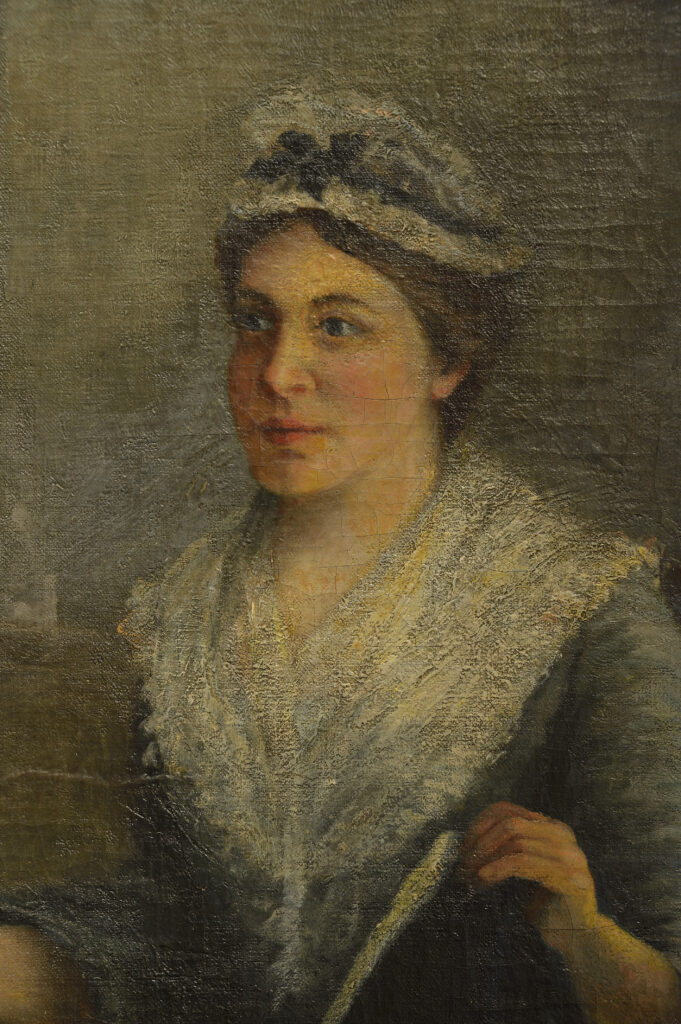
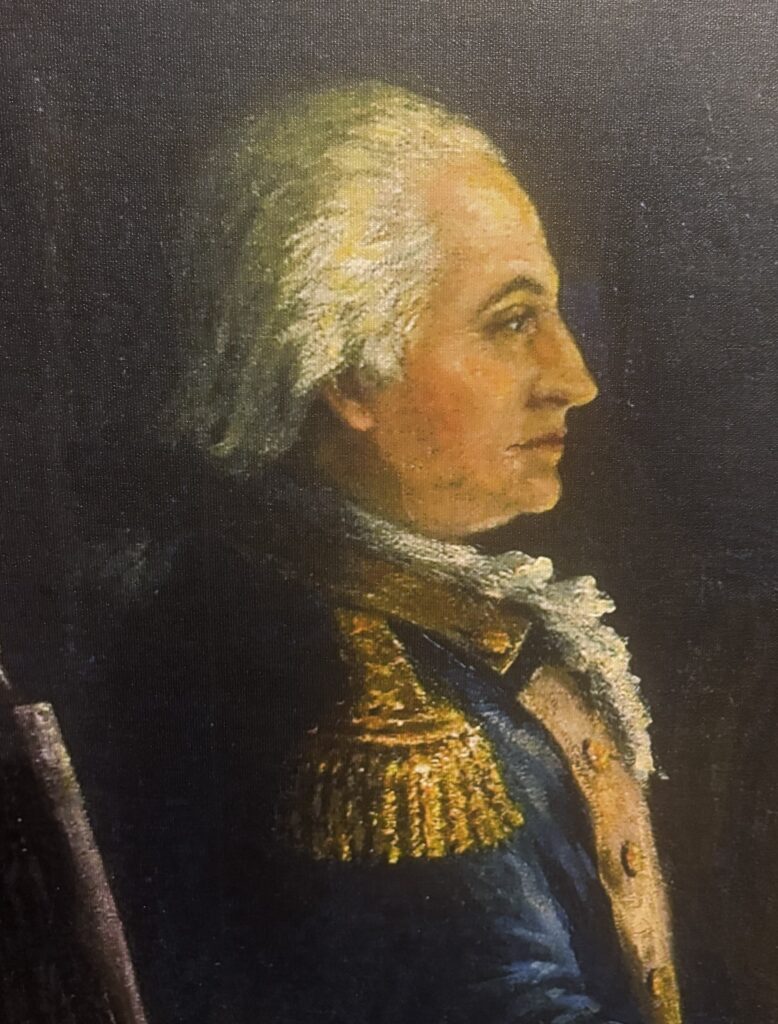
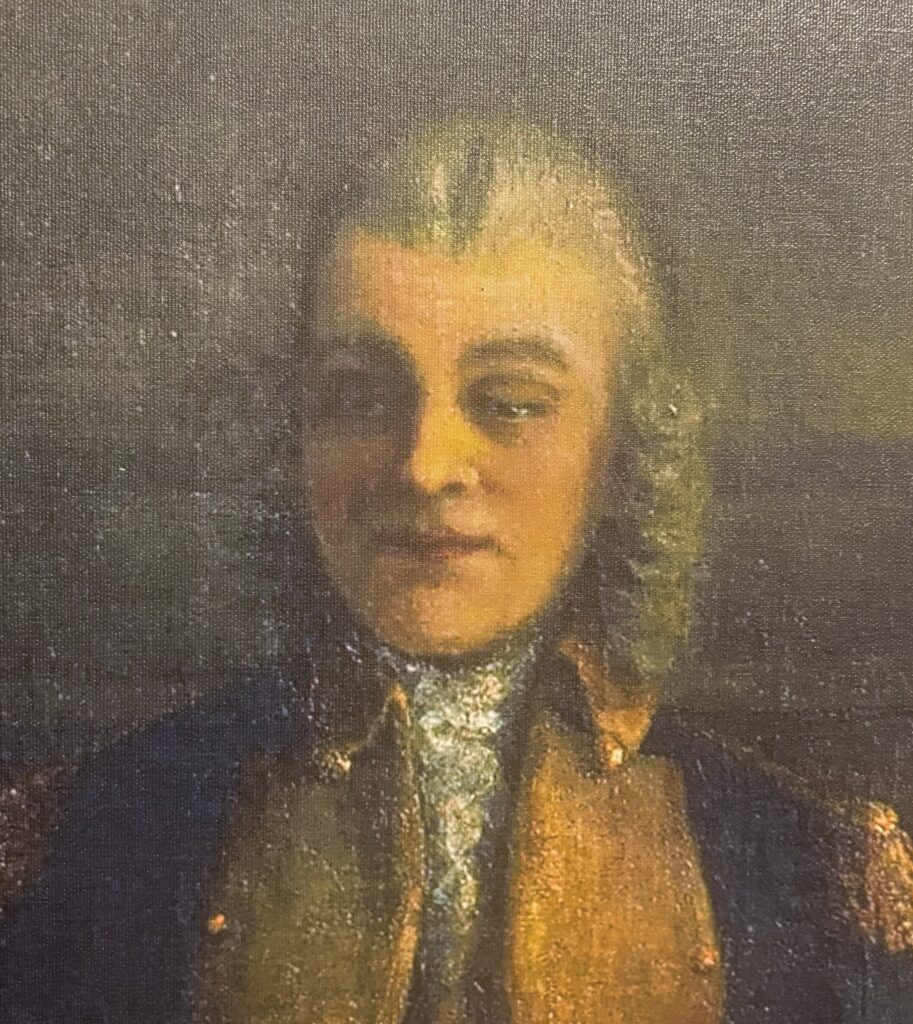
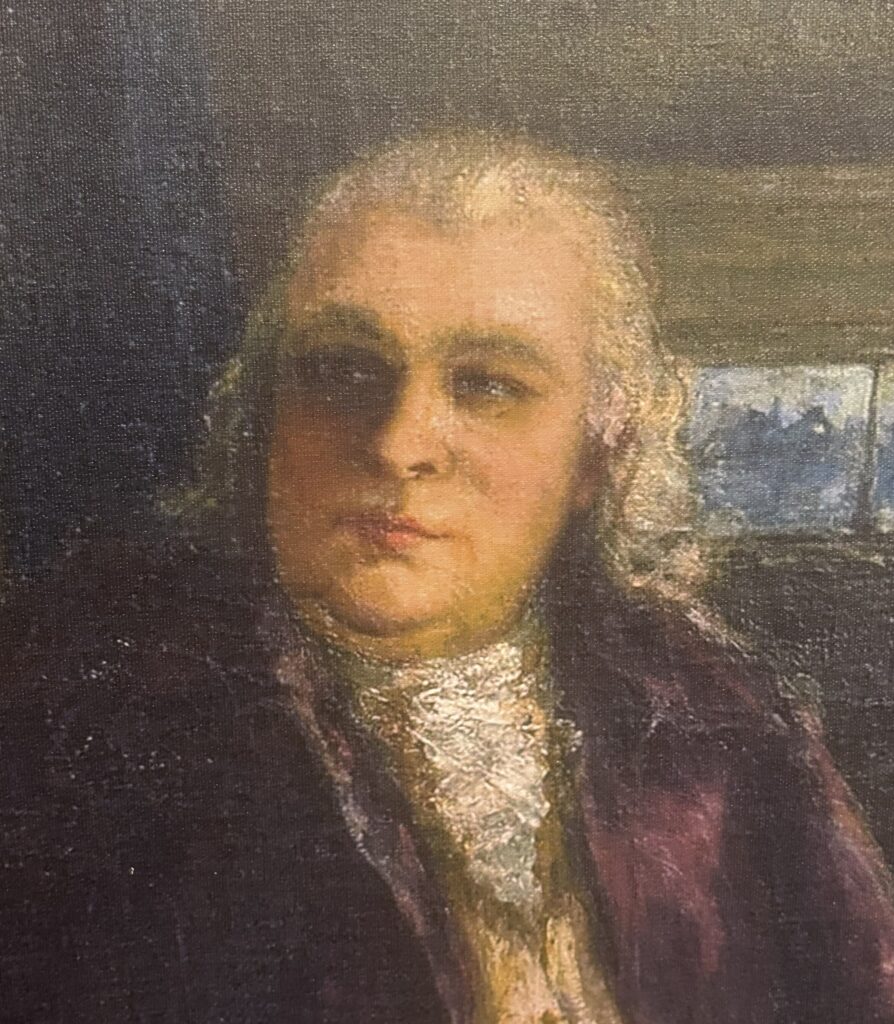
Betsy’s grandson, William Canby, first shared her story with the public in a speech he delivered at the Historical Society of Pennsylvania in 1870. Prior to 1870, her family told the story within their own circles, with Betsy’s daughter Clarissa leading the charge. After Canby’s speech, many family members attested that they, too, heard Betsy tell this story.
As Betsy Ross’ name became more widely known, the house on Arch Street that her family identified as the place Betsy lived was purchased by Charles Weisgerber and the American Flag House and Betsy Ross Memorial Association. In 1898, the Association raised funds to purchase the House and open it as a museum dedicated to Betsy Ross and the flag by selling over two million certificates adorned with a small print of Birth of Our Nation’s Flag.
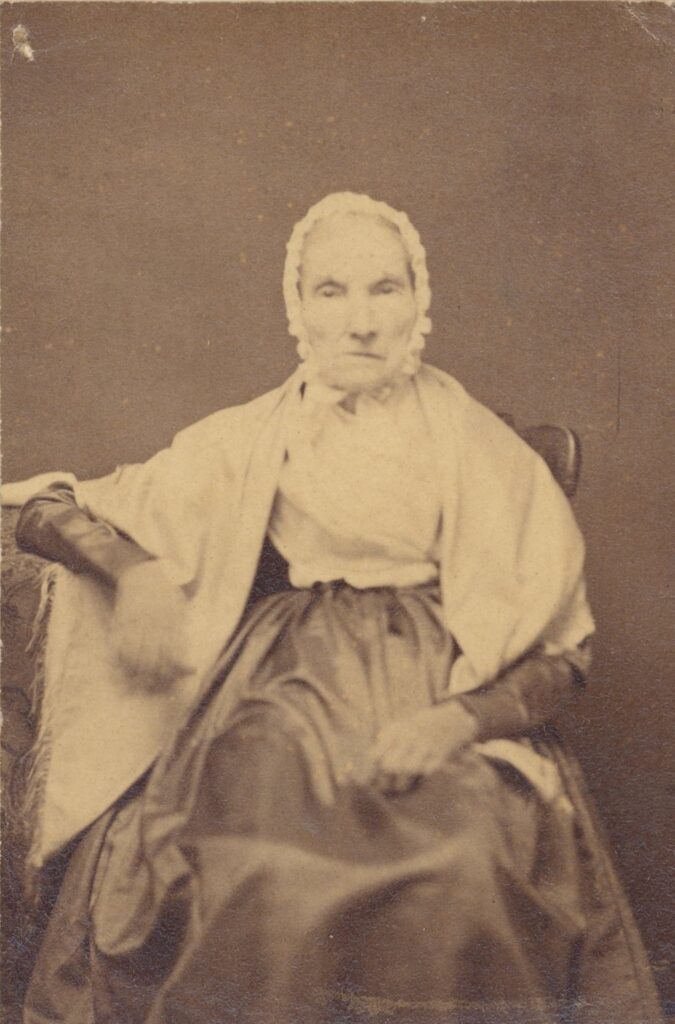
- Betsy Ross' Daughter
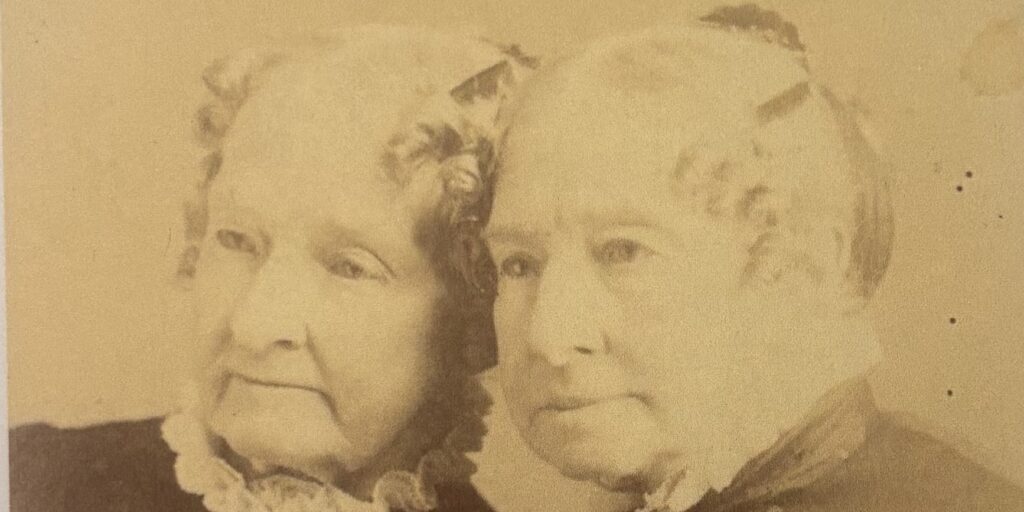
- Twin Daughters of Clarissa
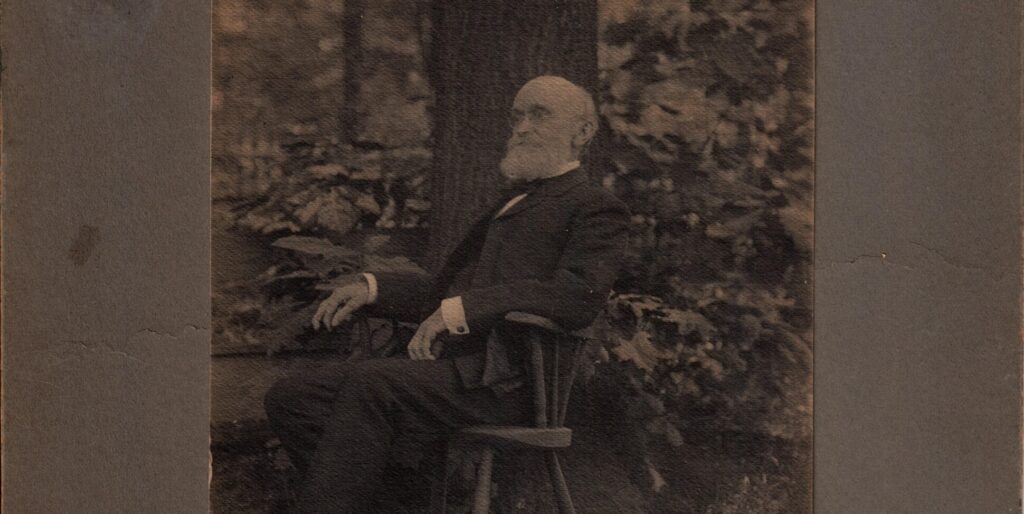
- Betsy Ross' Grandson

- Betsy Ross' Daughter

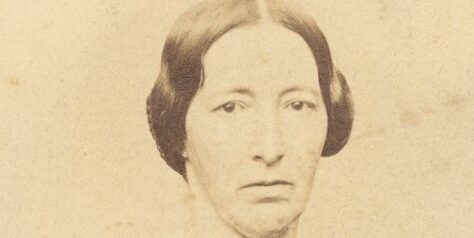
- Betsy Ross' Fifth Generation Descendant
“WITH HER HANDS” – 2F
Many families pass stories down through generations, and Betsy Ross’ family was no different. While her husband shared tales about fighting in the Revolution, Betsy told her children, grandchildren, nieces, and nephews about a visit from George Washington.
After Betsy’s death, when her story was becoming known to the world, family members wrote affidavits, or sworn statements, that they heard Betsy Ross tell the story that, “with her hands,” she made a flag for General George Washington.
Looking closely at the affidavit written by her daughter Rachel can help us break down the story and analyze what we know to be true, false, or somewhere in between.
WHAT WE KNOW
“she [Betsy] was previously well acquainted with Washington, and that he had often been in her house in friendly visits, as well as on business…”
MOSTLY TRUE – We cannot confirm that Washington made frequent “friendly visits” with Betsy, but we do know he was acquainted with her work as an upholsterer. He visited John and Betsy Ross at least twice in 1774, when he commissioned them to make bed hangings.
“That she [Betsy] had embroidered ruffles for his [Washington’s] shirt bosoms and cuffs…”
POSSIBLY MISUNDERSTOOD – It seems unlikely that an upholsterer would embroider ruffles for a shirt, but Betsy did make bed hangings for him. Bottom valances, one part of a fully dressed bed, would sometimes be referred to as dust ruffle. It is possible Rachel remembered hearing ruffles and assumed they were on his shirt.
“That this drawing was done in water colors by William Barrett [sic], an artist…He was often employed by mother afterwards to paint the coats of arms of the United States and of the States on silk flags.”
PROBABLY TRUE – We do now know the exact date when Betsy Ross began working with William Berrett, but they were unquestionably collaborating on flags by 1810. William Berrett’s father’s shop was on Arch Street, between Second and Third, the same block Betsy lived on in the 1770s and 80s.
The flag “was made on the order of a Committee, of whom Col. Ross was one, and that Robert Morris was also one of the Committee…”
PARTIALLY FALSE – No congressional record indicates the presence of a flag committee, but that does not mean that these men were not tasked with finding someone to make a flag. George Ross, Robert Morris, and George Read (another of Betsy’s uncles-in-law) were heavily involved with the defense of the Delaware River. Betsy’s first known flag receipt is located in the Pennsylvania Navy Board Minutes.
A HOUSE IS SAVED – 2G
As Betsy’s story grew, the house on Arch Street identified in Rachel’s affidavit was saved by Charles Weisgerber and the American Flag House and Betsy Ross Memorial Association. It opened to the public as a museum to Betsy Ross and the flag in 1898, thanks to the over two million dimes sent in by the public between 1898 and 1930.
American Flag House and Betsy Ross Memorial Association Certificate
1917
From the Betsy Ross House Archives
The Betsy Ross House
c. 1895
From the Betsy Ross House Archives
Charles Weisgerber
c. 1930
Family of Charles H. Weisgerber
Breezeway
2I
[T]he historical value of Betsy Ross need not be a zero-sum game…She is important to our understanding of American history not because she made any one flag, however iconic that moment may have become, but because she was a young craftswoman who embraced the resistance movement with vigor, celebrated its triumphs, and suffered its consequences.
– Marla Miller, Ph.D.
Author of Betsy Ross and the Making of America
2F
Welcome to the Betsy Ross House, the museum that celebrates the legendary maker of the first American Flag. Betsy Ross is one of the most famous women in American history, best known for her role in the creation of the Stars and Stripes during the Revolutionary War. But her courage, strength and diligence are also worthy of recognition.
Betsy’s life was filled with hardships. Her family and fellow Quakers shunned her when she married a man of a different faith. She was widowed three times, twice by the age of thirty. Faced with these and other misfortunes, Betsy still managed to prevail as a successful entrepreneur, running her own business at a time when women were not given the same opportunities as men.
Betsy Ross was born on January 1, 1752 on a farm in New Jersey. She was the eighth of 17 children born into the Quaker family of Rebecca and Samuel Griscom. Her father, a successful carpenter, moved his family to Philadelphia when Betsy was three years old.
Betsy attended a Quaker school and completed her formal education by the age of fourteen. After finishing school, most girls of Betsy’s background prepared for marriage by learning how to manage a household from their mothers or other female family members. Betsy’s situation, however, was unusual. She went on to apprentice to a talented and popular Philadelphia upholsterer.
Betsy experienced the tragic loss of loved ones far too often. Two of her seven daughters died as infants. Her mother, father and a sister died within days of each other during the Yellow Fever Epidemic.
Betsy was 24 when her first husband, John Ross, died while on duty with the local militia. Her second husband, Joseph Ashburn, died in an English prison after his ship was captured by the British, leaving the young widow and their two daughters. She at last enjoyed a lengthy marriage to her third husband, John Claypoole. They had five daughters and were married for 34 years before he passed away.
Foyer – 3
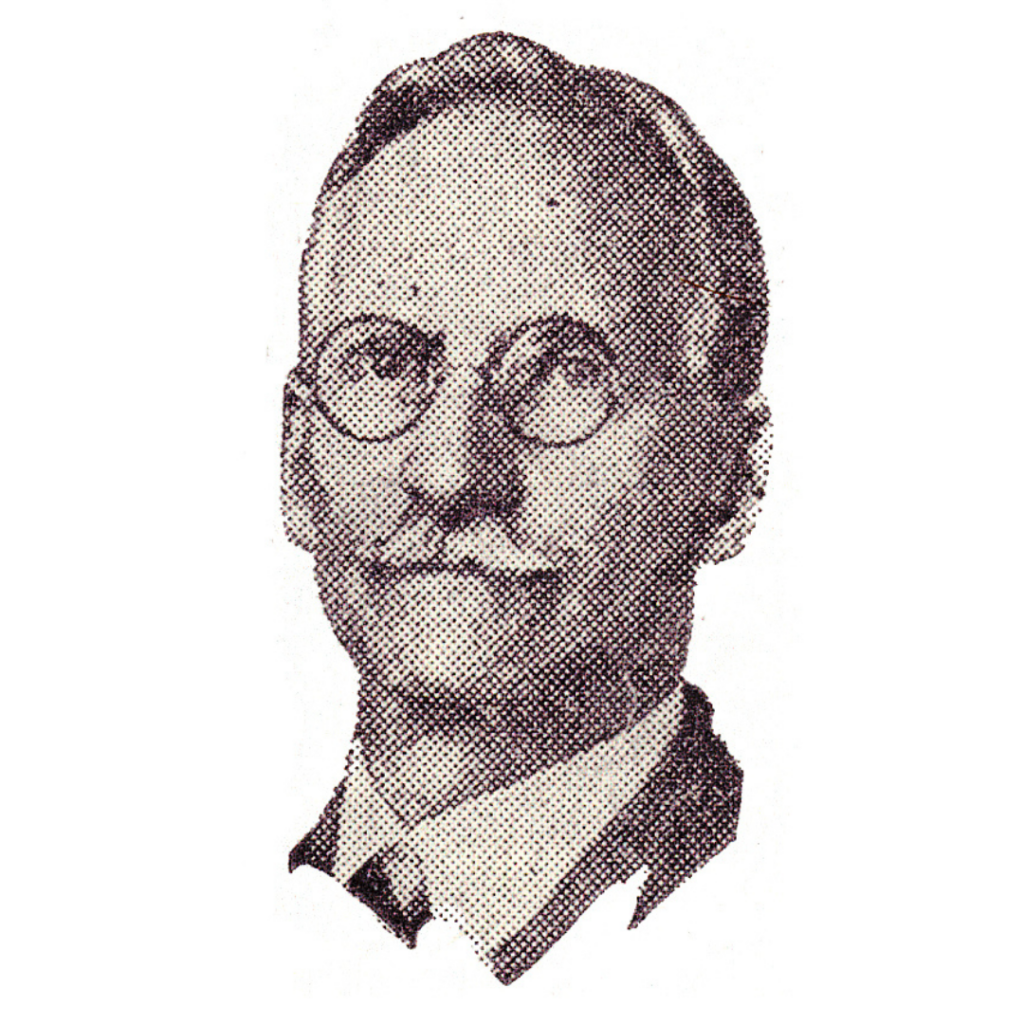
CHARLES WEISGERBER
In 1898, Charles Weisgerber began efforts to save the Betsy Ross House from demolition. Over the next 30 years, he raised money to restore the house to its 18th century appearance, and in the process, saved a national treasure.
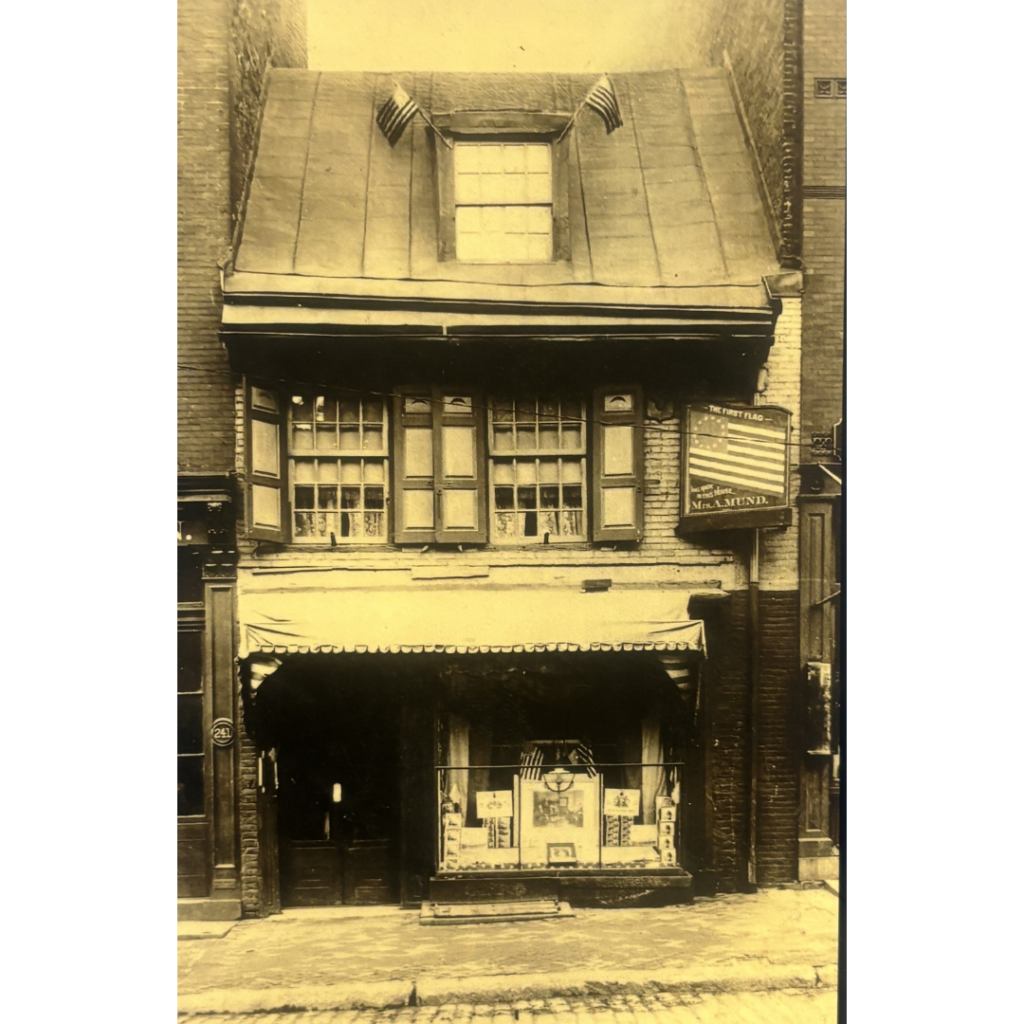
BETSY ROSS HOUSE
Facsimile of Original Photograph
c. 1895
In the late 19th century, the Mund family owned this building from which they ran a tavern and a cigar store. By that time, most of the 18th-century homes on the block had been torn down. Many people feared Betsy Ross’ home would meet the same fate. Charles H. Weisgerber, having become intrigued by story of Betsy Ross, began making plans to save the house.
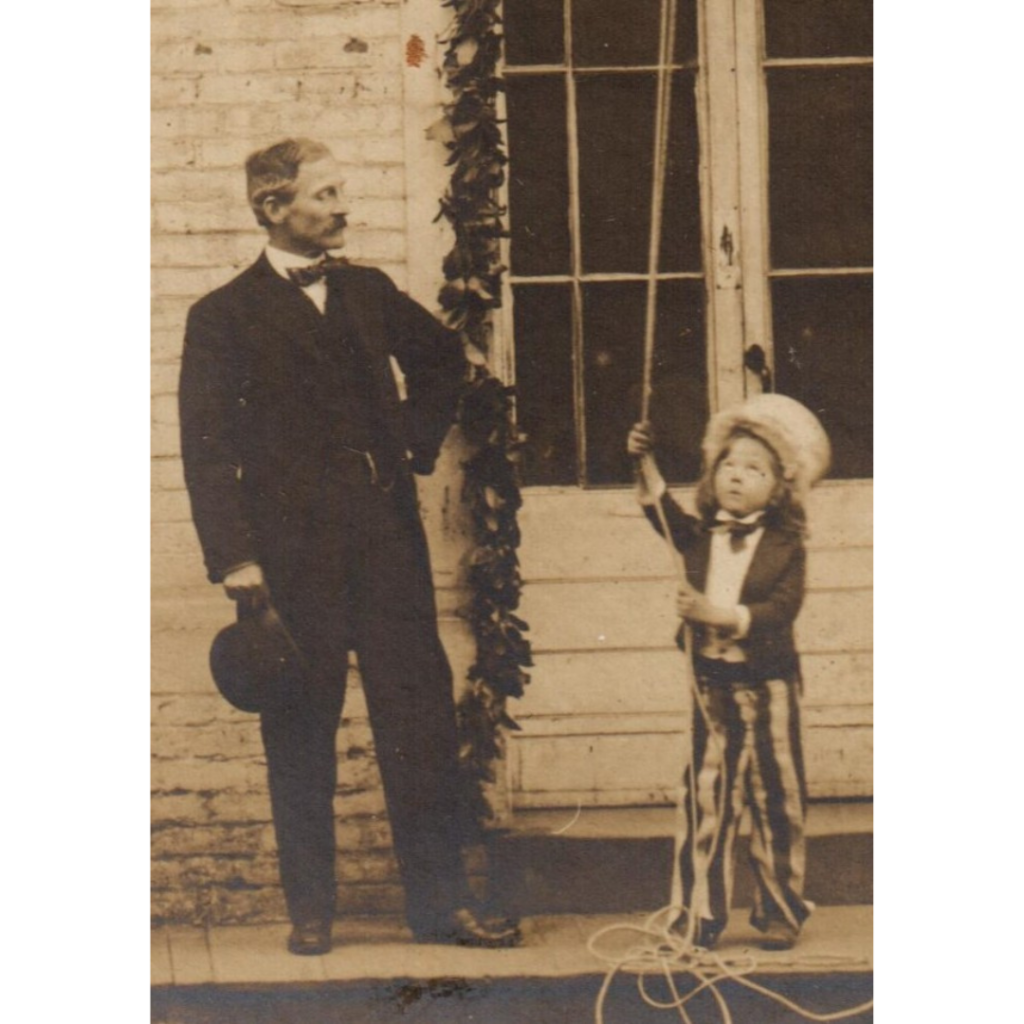
CHARLES AND VEXIL VEISGERBER
Facsimile of Original Photograph
c. 1908
Weisgerber, his wife and young daughter moved into the house in 1898 where they immediately opened the first floor to the public for tours. In 1902, the Weisgerber’s son was born in the house. The patriotic couple named their son, Vexil Domus, Latin for “Flag House.” On patriotic holidays, Weisgerber dressed his daughter as Betsy Ross and his son as Uncle Sam.
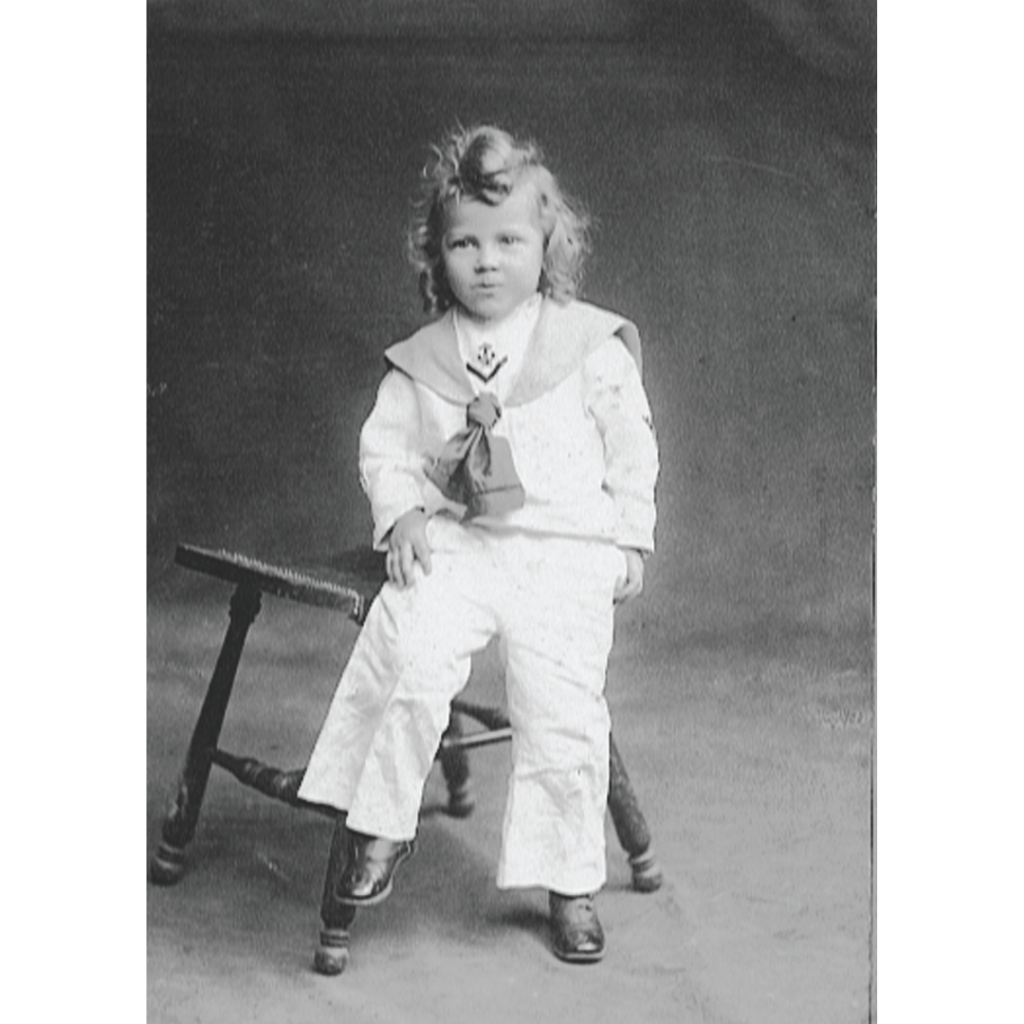
VEXIL DOMUS WEISGERBER
Facsimile of Original Photograph
c. 1905
According to a 1908 New York Times article, Vexil Domus was “one of the most interesting of the house’s attractions.” Pictured here in a sailor suit, Vexil Domus would grow up to become the curator of the Betsy Ross House.
AMERICAN FLAG HOUSE AND BETSY ROSS MEMORIAL ASSOCIATION CERTIFICATE
Printed Paper
1899
Shortly after moving in, Charles H. Weisgerber and the American Flag House and Betsy Ross Memorial Association began a fundraising campaign to purchase the house and restore it to its original 18th century condition.
Weisgerber appealed to the American public, particularly schoolchildren, to donate to the cause. For ten-cents, a donor received a lifetime Association membership and a personalized copy of the above certificate. Individuals who formed clubs of thirty members received a print of Weisgerber’s now famous painting, Birth of Our Nation’s Flag (as seen in the center of the certificate), in addition to certificates for each member.
Nearly 2 million dimes were donated. In 1902, Weisgerber purchased the house for $25,000 and began restoring it to the period when Betsy lived there.

BETSY ROSS SOAP SCULPTURE
Facsimile of Sketch and Facsimile of Original Photograph
1893
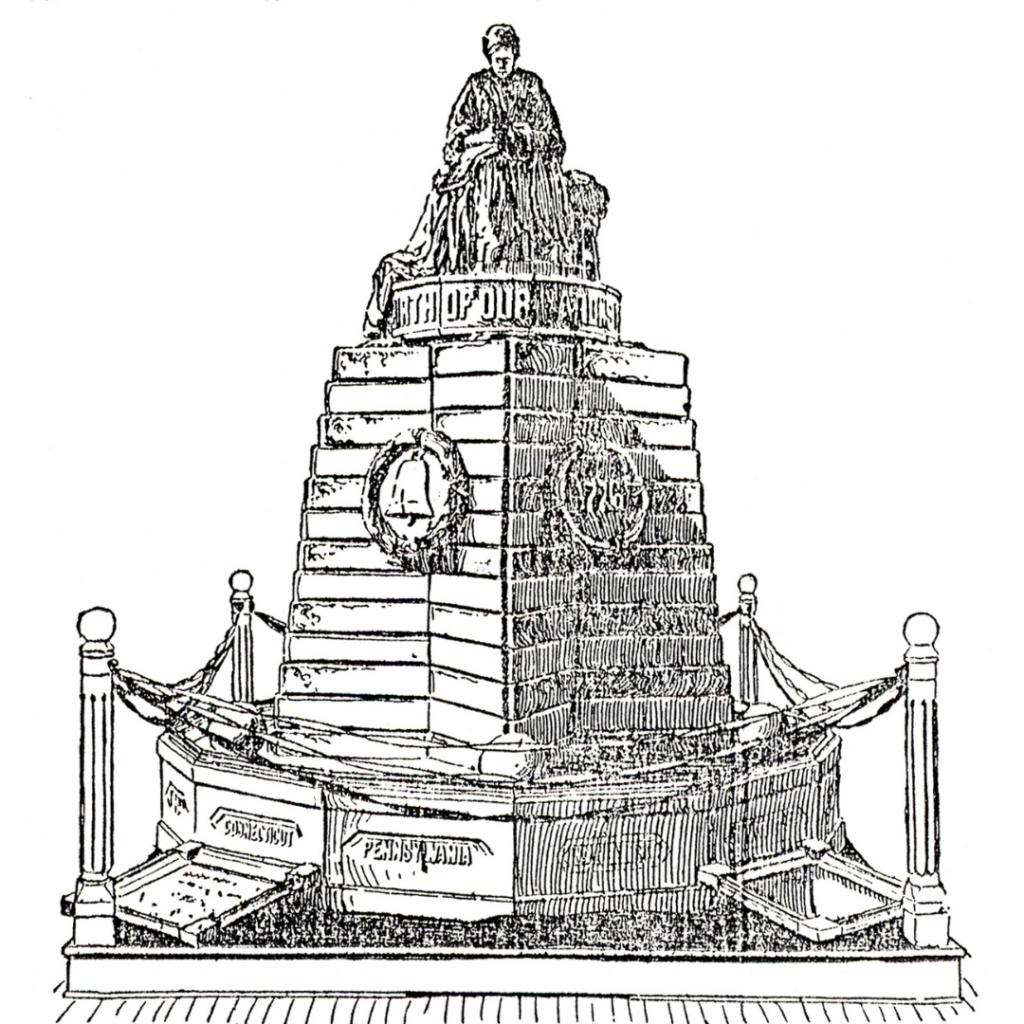
Charles H. Weisgerber used his talent as an artist to help spread Betsy Ross’ story. In 1893, he carved a sculpture of Betsy Ross entirely from soap for the Dreydoppel Soap Company of Philadelphia. The sculpture measured sixteen feet tall, weighed five tons, and was displayed in the Columbian Exposition in Chicago. More than 27 million people had the opportunity to view it and learn more about the famous flagmaker.
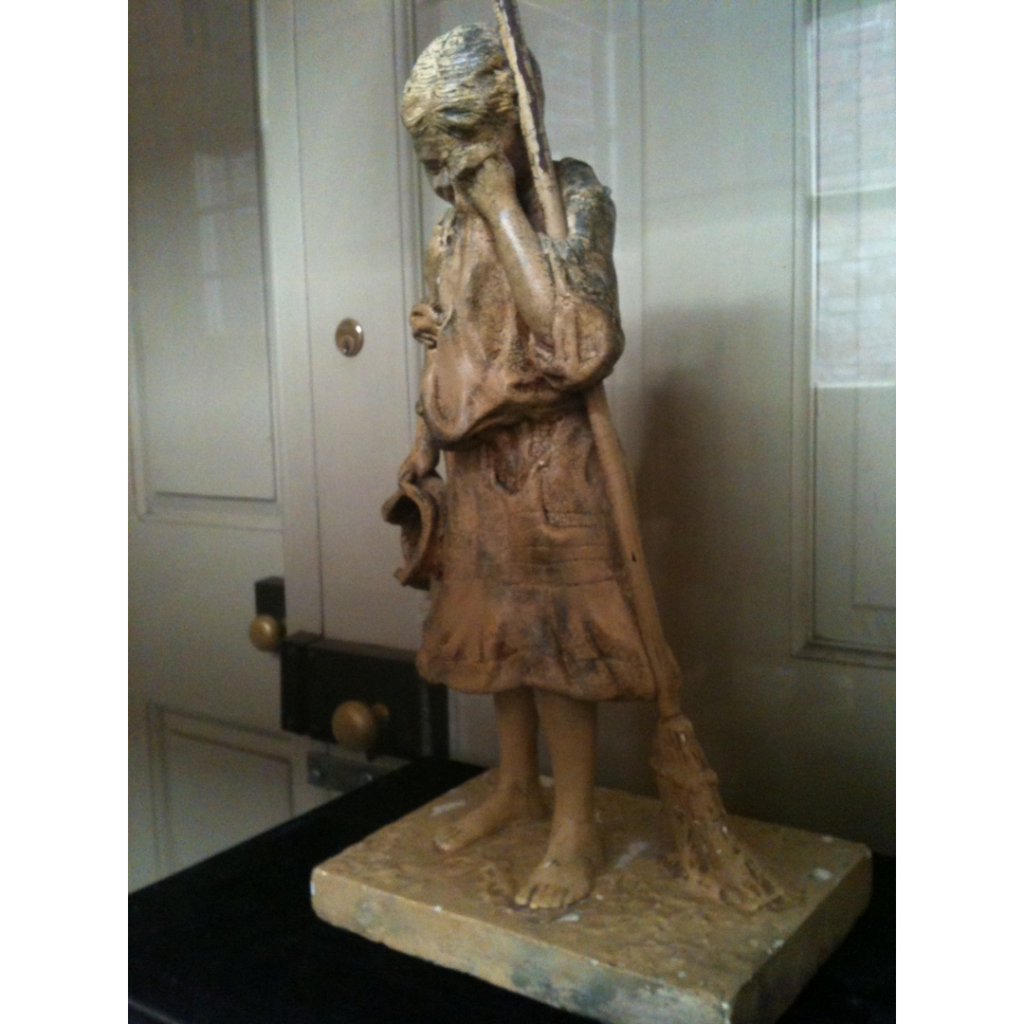
WOMAN WITH BROKEN BUCKET
Charles H. Weisgerber
Painted plaster, wood
c. 1890
Charles H. Weisgerber submitted this small sculpture to the Paris Conservatory of Art and received a scholarship. Later in life, Weisgerber would call on his artistic talents once more to create one of the most famous paintings of Betsy Ross, Birth of Our Nation’s Flag (a copy of the painting can be viewed in the Parlor).
Parlor – 4
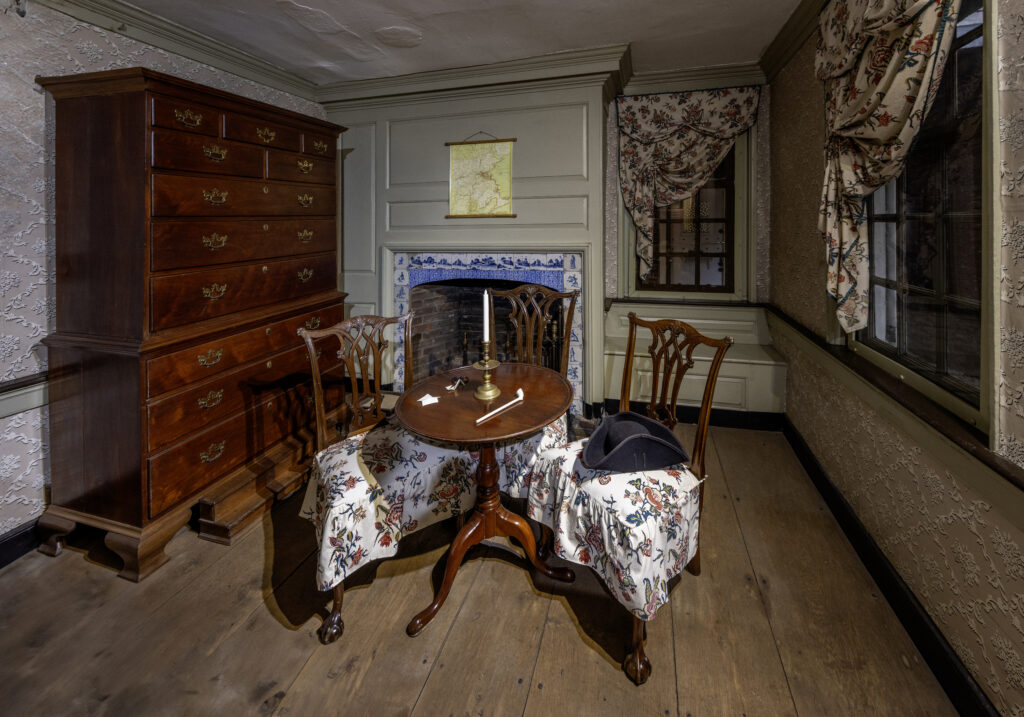
For nearly a century, only her family knew the story of Betsy Ross and the making of the first flag. It wasn’t until Betsy’s grandson, William Canby, made a speech to the Historical Society of Pennsylvania in 1870 that the nation learned about his remarkable grandmother and her accomplishments.
According to her children and grandchildren, Betsy often told them about the day when George Washington and two other members of the Continental Congress walked through the door of her upholstery shop. She recognized her important guests and invited them into her parlor. They told her that they wanted her to make a flag for the new nation. She explained that she had never made a flag before, but she would be willing to try. One year later, on June 14, 1777, Congress passed the Flag Resolution, making the Stars and Stripes the official flag of the United States.
BIRTH OF OUR NATION’S FLAG (REPRODUCTION)
Charles H. Weisgerber
1892
Oil on Canvas
Actual size: 9’ x 12’
In 1892, Charles H. Weisgerber painted the scene of Betsy Ross and the Flag Committee and entered it in a statewide contest where it won $1,000 for first place. Shortly afterward, the painting traveled to Chicago for the World’s Columbian Exposition where millions of Americans would see the painting and learn Betsy Ross’s incredible story. Today, the painting is on view at the State Museum in Harrisburg.
In 1898, Charles H. Weisgerber, along with other concerned citizens, founded the American Flag House and Betsy Ross Memorial Association to help save her home on Arch Street (today, known as the “Betsy Ross House”) and ensure Ross’ place in history. Weisgerber opened the first floor of the House to the public for tours that same year.
Bedroom 1 – 5
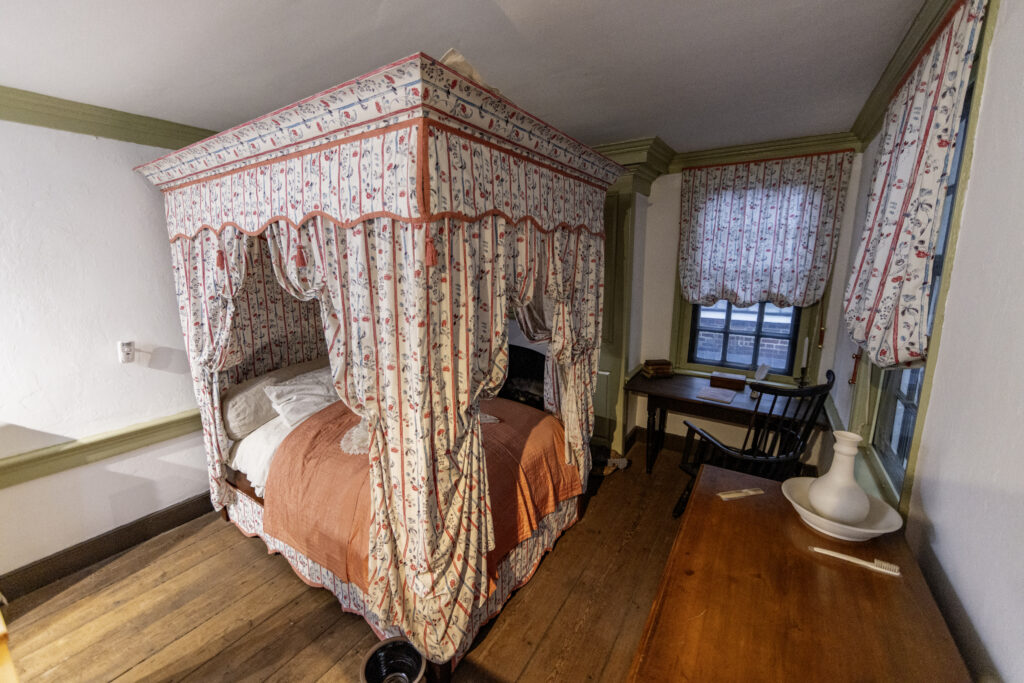
Tax records indicate that Betsy and her husbands did not own a house. Betsy rented rooms in this house from Hannah Lithgow, a widow. This property was rented to several different tenants at one time. The Widow Lithgow or another family that shared the house with Betsy might have used the rear bedroom.
There are some who bring a light so great to the world, that even after they have gone the light remains.
This exhibit is dedicated in loving memory of our dear friend who brough Hannah Lithgow’s story to life.
Virginia “Gini” Staudt Loomis
April 13, 1956 – June 17, 2021
Bedroom 2 – 6
Making flags for the new nation was a dangerous job. If the British soldiers found out, Betsy could have been charged with treason and sent to prison. She had to do this work in a private place. In a house filled with many people, her bedchamber was probably the safest room.
Betsy lived during one of the most difficult periods in Philadelphia’s history. In the fall of 1777, the British captured the city, taking anything they needed from the residents. British soldiers moved into the homes and took money, valuables, clothing, blankets and all of the food they could find. Betsy may have had to share her home with enemy soldiers.
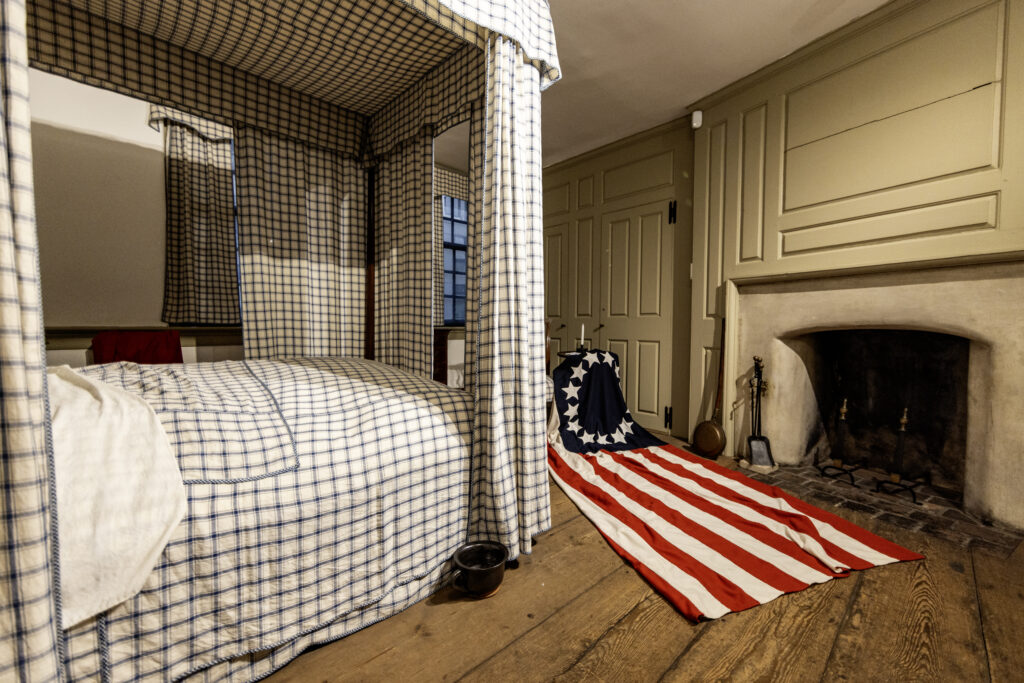
WHY IS THE FLAG ON THE FLOOR? – 6B
In Betsy Ross’ time, no United States Flag Code existed. We chose to display the flag in this manner to give an accurate representation of what it would be like to stitch a large, bulky, 10-foot flag, a common size in the 18th century.
In compliance with the modern Flag Code, there is a cloth underneath the flag keeping it off the floor.
[Detail from Birth of our Nation’s Flag]
UPHOLSTERY SHOP
Reinterpretation for the Betsy Ross House Upholstery Shop, 2010, was generously funded by American Express.
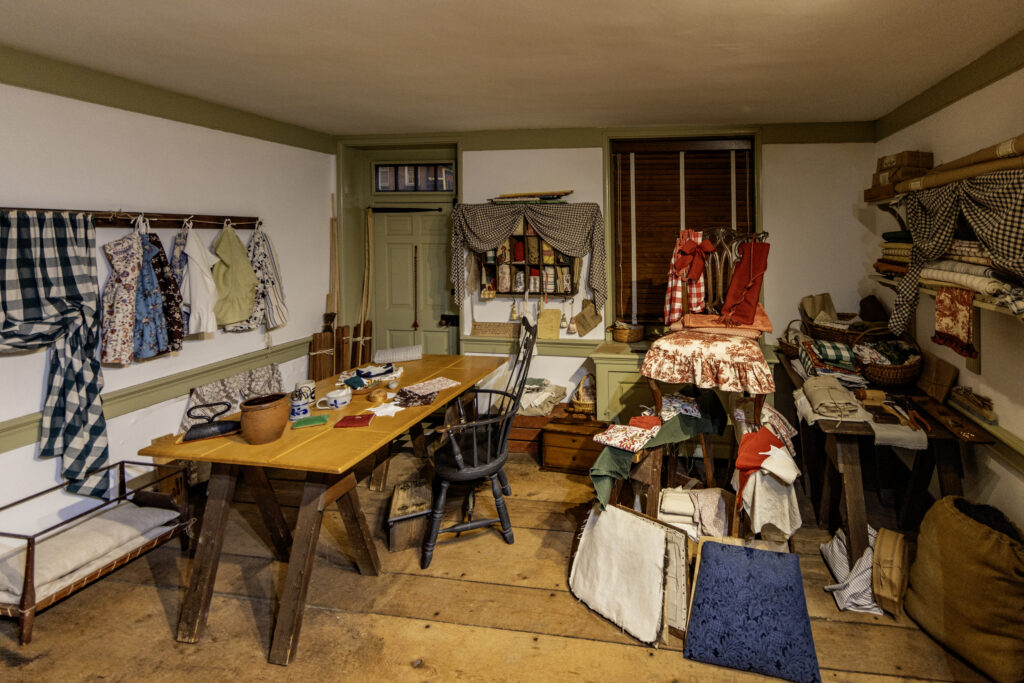
THE UPHOLSTERY SHOP – 7A
Upholsterers in Betsy’s time performed a variety of tasks. Not only did they stuff and cover furniture, but they made slipcovers, curtains, tablecloths, rugs, parasols, Venetian blinds, tassels, mattresses and blankets. In addition, they often sold and hung wallpaper. Betsy also incorporated flag-making into her trade and became known and advertised as a flag-maker throughout her life.
There is no record of Betsy’s third husband, John Claypoole, ever apprenticing to be an upholsterer. But after his marriage to Betsy and retirement from the military, he began advertising as an upholsterer, doing work for many important Philadelphians and for the Pennsylvania legislature. It is possible that Betsy either taught the trade to her husband or simply used his name to conduct her business.
JOHN ROSS PROBATE PAPERS – 7B
Betsy and John Ross were married for just over two years before his untimely death in 1776. These probate papers are the declaration of the death of John Ross, and state the legal transfer of his belongings to Betsy. These documents, which contain the inventory of John’s belongings at the time of his death, show that he had very few possessions.
Also of great significance, these papers include the only known signature in which Betsy signed her name “Elizabeth Ross.” Signatures exist of Betsy with her other husband’s last names – Ashburn and Claypoole – but this is the single known surviving signature of Betsy’s most famous moniker.
Institute of Museum and Library Services
Please Do Not Photograph the Probate Papers
Cellar – 8A
Wartime was difficult for many tradespeople in Philadelphia. Betsy’s business declined as the Revolutionary War progressed. The colonists no longer desired expensive upholstery work, so she took government contracts as a way to earn extra money. The journals of the Continental Congress state that on May 29, 1777, Betsy Ross was paid over £14, a significant amount of money at that time, for making flags for the Pennsylvania Navy. She was also paid for making musket balls and cartridges for the Continental Army.
8B
Betsy has hired you to assemble musket cartridges in the cellar while she runs errands. You decide to:
Choice A: Do as you are told, and begin assembling musket cartridges in the cellar.
Upon your arrival, Betsy thanks you for your help. You are paid handsomely for your work!
Choice B: Bring the supplies up to the Upholstery Shop where there is more light and you can help customers who may come in.
When she returns, Betsy is upset to find you in the Upholstery Shop. Making cartridges, like making flags, is treason! You both could have been found guilty if a Loyalist of British spy had walked in!
Betsy asks you to make cartridges in the morning, when the light is best in the cellar. You decide to:
Choice A: Wake up early so that you can get as many cartridges made before the midday meal.
Betsy is thrilled that you were able to make so many cartridges before noon! She congratulates you on a job well done.
Choice B: Sleep in, and wait until nightfall to make cartridges by candlelight.
By nightfall, Betsy is upset to find you in the cellar with a candle near the black powder! Black powder is easily set alight, and you could have burned the house down!
Betsy has shown you exactly how much black powder to put into the musket cartridge using the powder measure tool. You decide to:
Choice A: Put in half as much powder so that you will be able to make more cartridges, and get paid more.
The musket cartridges you made with less powder find their way to the battlefield, and don’t have enough powder to fire properly. Many of the musket balls simply land a few yards away, missing their targets and putting the soldiers’ lives at risk!
Choice B: Use the powder measure tool to put the precise amount into the cartridge.
Betsy is pleased that you listened to her instructions. She pays you, and invites you to stay for dinner and dessert!
DOING LAUNDRY – 8C
It was hard work keeping clothing clean in the 18th century. Expensive silks, woold, and other fabrics required special care provided by scourers and fullers, much like we send items out for dry cleaning today. Eighteenth-century Philadelphians washed their household linens, – napkins, sheets, towels, shirts, and shifts (undergarments) – every two or three weeks. Many Philadelphians hired washerwomen to do their laundry, a task which typically took two or three days to complete.
THE WASHERWOMEN – 8D
Working as a laundress was a difficult, low-paying job in the 18th century. In the early colonial period, many washerwomen were enslaved or indentured servants. Toward the end of the 18th century, most were free black women and widows who struggled to support themselves. Little is known about most washerwomen, but the stories of a few offer a glimpse into their lives.
Susanna Cook was a white widow with two children who lived at 3rd & Walnut Streets. After her husband died during the Yellow Fever epidemic in 1793, she rented out rooms in her house and worked as a washerwoman, earning about $3 per week. She fell ill in 1801 and died, impoverished, in an almshouse.
Jane Gray was a widowed African American washerwoman. In 1795 and 1796, she lived in Knight’s Yard, between Fourth and Fifth Streets in Race Street. She was a member of the “Black Class” at St. George’s Methodist Church in 1794, but later joined St. Thomas’ African Episcopal Church.
Judath was an African American washerwoman employed by Elizabeth Drinker, a wealthy Quaker woman. While her husband was at sea, she and her young son Michael attended to Drinker’s laundry. Judath ceased working for Drinker when her husband returned from his voyage.
DAY-BY-DAY: THE WASHERWOMAN DOES THE LAUNDRY – 8E
Night Before
Soak heavily soiled linens overnight in water, sometimes adding lye or urine, which contains ammonia, a bleaching agent.
Day 1 – Washing Day
Early the next morning, haul water from a well outside for boiling, washing, and rinsing. Gather wood for a large fire.
Boil linens in a large kettle over the fire. Stir with a large wooden bar, then move to a second washtub to be beaten brushed, and scrubbed by hand with soaps made of lye. Repeat two to three times as necessary until linens are clean.
Rinse the linens in a third washtub. Add bluing, such as powdered indigo, for whitening. Wring out, hang to dry, either outside when the weather is nice, or inside on lines or racks when it is cold or rainy.
Day 2 - Ironing Day
Begin day starching delicate linens. Boil starch mixture. Cool. Dip delicate linens into mixture and allow to dry.
Heat two irons. Iron on the wrong side to smooth wrinkles. When iron cools, switch to the second iron. Continue this process all day, until the linens are ironed.
Day 3 - Complete Ironing as Needed
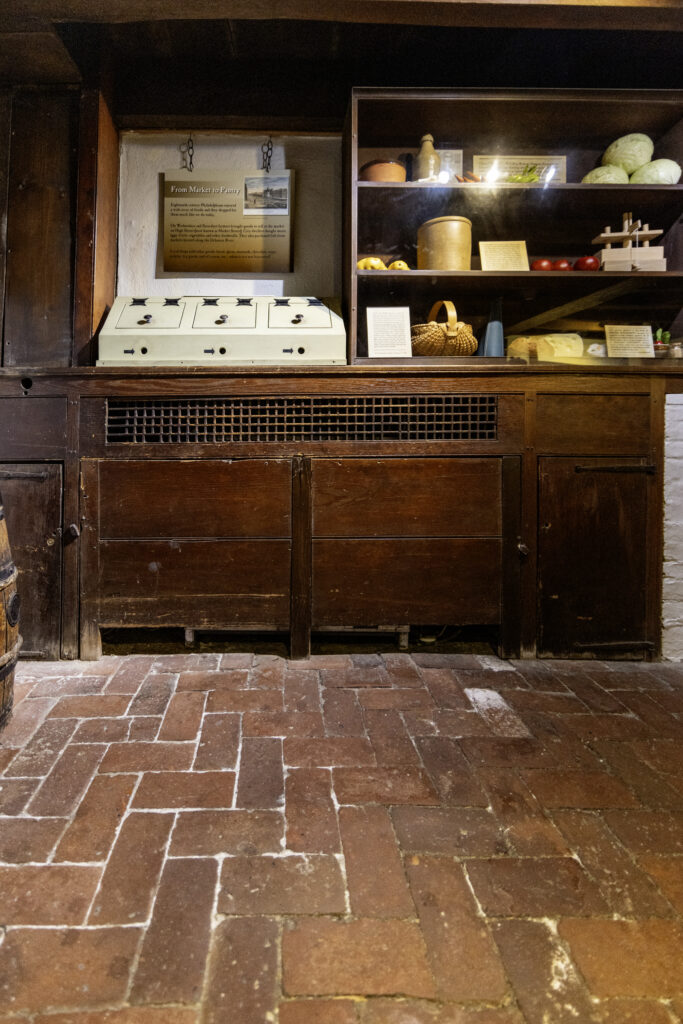
FROM MARKET TO PANTRY – 8E
Eighteenth century Philadelphians enjoyed a wide array of foods, and they shopped for them much like we do today.
On Wednesdays and Saturdays farmers brought goods to sell at the market on High Street (now known as Market Street). City-dwellers bought meats, eggs, fruits, vegetables, and other foodstuffs. They also purchased fish from markets located along the Delaware River.
Local shops sold other goods: bread, spices, mustards, chocolate, sugar, pickles, dry goods, and of course, tea – when it was not boycotted!
WHAT’S THAT SMELL – 8F
Sniff at the arrows and guess the smell of the common 18th century pantry items. Lift the door to reveal the answer!
#1
Tea – When not boycotted, tea was a common drink in Colonial America.
#2
Salt Cod – Fish was an abundant resource in Philadelphia’s waterways.
#3
Pickling Spice – Pickling preserved vegetables and meats for winter when fresh food was not available.
9A
Betsy returned to her Quaker roots in 1784 when she and her husband John Claypoole joined the Society of Free Quakers – a sect, unlike the pacifist traditional Quakers, that supported America’s fight for freedom from the British. Free Quaker records show that Betsy was a very active member. She did some upholstery work for the meetinghouse and was paid to clean the building.
Betsy moved to her daughter’s farm in a remote Philadelphia suburb when she was 76 years old. According to her family, she continued to take the long carriage ride into the city each week to attend worship services at the Free Quaker Meetinghouse, which still stands at the corner of 5th and Arch Streets.
BETSY’S RECIPES – 9C
Step One.
Heat hot water in the chocolate pot over the fire.
Step Two.
Grate the chocolate and add it to the pot.
Step Three.
Quickly roll the molinillo between your palms to froth the hot chocolate.
Step One.
Cut the vegetables into pieces and add them to the big pot in the fireplace along with the turkey.
Step Two.
Pour some cream into a bowl and stir the cream into the pot.
Step Three.
Use a ladle to put some stew into a bowl and enjoy!
Step One.
Look around for food that hasn’t been used yet. Would it make a good dinner?
Step Two.
Place these items and some bread in a dish for dinner. Dig in!
MOLINILLO – 9D
This is what the molinillo looks like inside the chocolate pot. Roll it between your palms to froth the hot chocolate.
10A
By 1812, John Claypoole developed a physical disability, possibly in relation to old war injuries. Betsy’s young, widowed daughter Clarissa moved into their home with her five children and a sixth on the way. With Clarissa’s help, Betsy continued to run her upholstery shop and flag-making business. After over 50 years in the trade, Betsy’s rapidly failing vision led her to retirement at the age of 76.
Eventually, Betsy lost her eyesight completely. She spent the last three years of her life living with the family of her daughter Jane on Cherry Street in Philadelphia. With her family present, Betsy died peacefully in her sleep on January 30, 1836. She was 84 years old.
COLONIAL CHOCOLATE – 10B
In the 18th century, people drank chocolate as a beverage, usually at breakfast time. Merchants imported cocoa pods to Philadelphia from South America and millers processed the pods into chocolate, adding a small amount of sugar and their own special mixture of spices like cinnamon, nutmeg, and even cayenne pepper. Millers usually sold their chocolate in 1-pound blocks.
To make the drink, people grated the chocolate into hot water, and then frothed it with a tool called a molinillo. Besides being a filling breakfast, people believed chocolate could help treat illnesses like smallpox or gout.
COURTYARD
Welcome to the Betsy Ross House!
You’ve heard the legend. But stitching America’s first flag is just one part of the Betsy Ross story.
Courageous rebel. Grieving widow. Working mother. Business owner. Survivor. What was it like to run a shop as a young widow, and commit treason by taking on a dangerous order? Step back in time and ask Betsy yourself! Inside the historic Betsy Ross House, discover artifacts, documents, and historic interpreters that reveal the extraordinary life of an ordinary 18th-century woman.
COURTYARD RULES
- The Betsy Ross House is excited to offer free, seasonal, engaging programming in the courtyard. As a courtesy to performers and guests:
- Please refrain from running, using foul language, or engaging in other disruptive behaviors.
- Guests are welcome to move the courtyard chairs, but please return them to their original locations before leaving.
- Smoking, vaping, and consumption of alcohol are prohibited.
- Please don’t climb, plug the spouts, drink, or splash in the fountain water. But feel free to pet the cats!
- Make sure not to block the gravesite so that others can see Betsy’s final resting place.